Power out at home? How to check for an outage and who to call
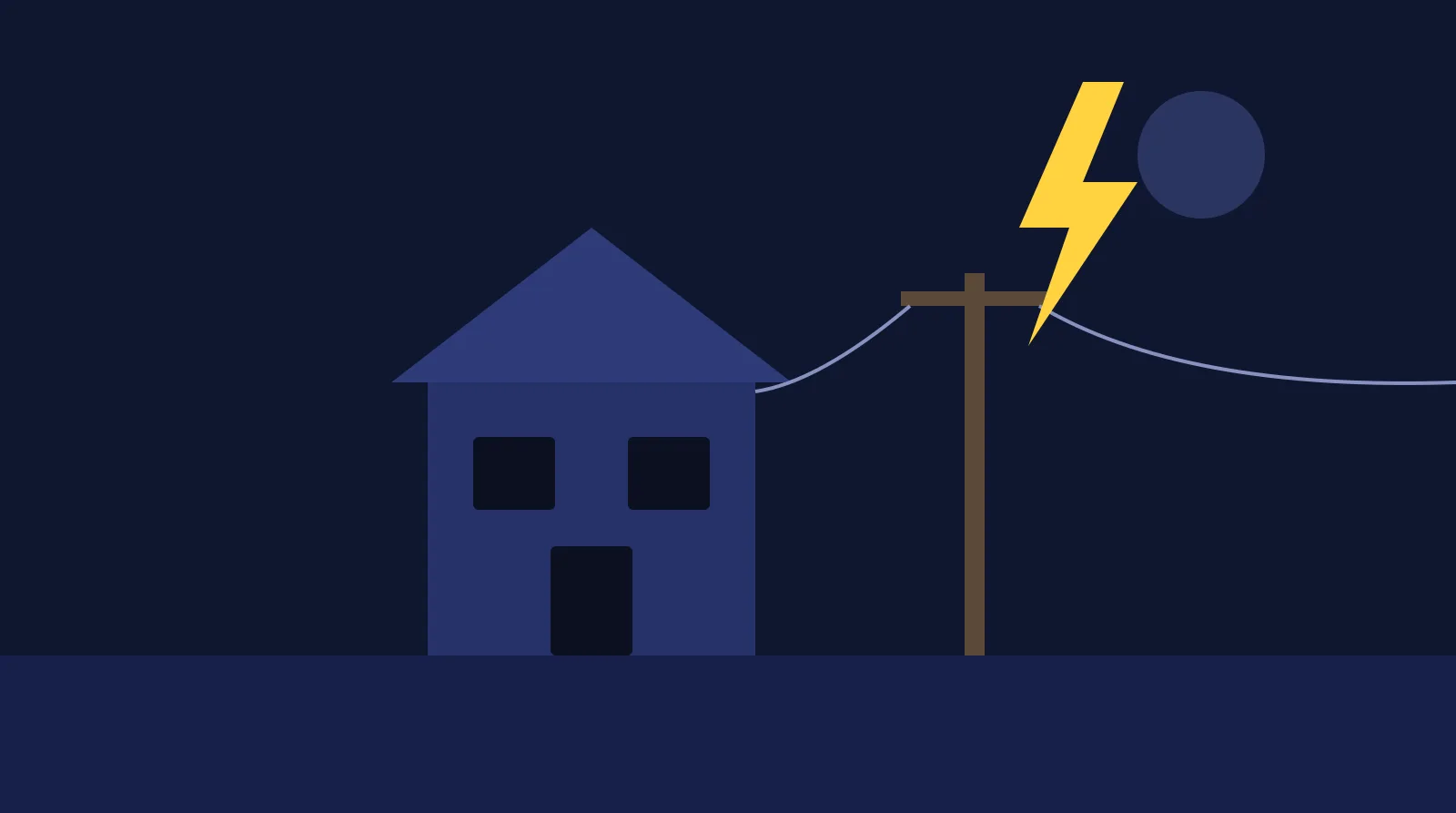
When the lights go out, the first thing to work out is whether the problem is inside your home or on the network. That decides who can fix it, and it only takes a minute to check.
1. Check your switchboard first
Look at your switchboard (often in or near the meter box). If a safety switch or circuit breaker has tripped, the problem is probably inside your home. Try switching it back on. If it trips again straight away, unplug the appliances on that circuit and try again: a faulty appliance is a common cause. If it still won’t stay on, call a licensed electrician.
If your switchboard looks normal and your neighbours’ lights are off too, it’s most likely a network outage.
2. Contact your distributor, not your retailer
In Australia, two different companies are involved in your electricity:
- Your retailer (for example AGL, Origin or EnergyAustralia) sends your bill and runs your account.
- Your distributor owns the poles, wires and substations in your area and fixes outages. You don’t choose it: it depends on where you live, and your bill names it.
Report outages to your distributor. Your retailer can’t see or fix network faults. Our power outage page lists the distributors we cover by state, and each one’s page here links to its official outage map and gives its faults phone number where we could confirm it.
3. Check the outage map
Each distributor publishes an outage map or list. Search your street or suburb to see whether the outage is known, whether it’s planned or unplanned, and the estimated time power will be back. If your outage isn’t listed, report it: the distributor may not know yet.
Restoration times are estimates. After big storms, crews deal with dangerous situations first, then the faults that bring the most homes back.
Stay safe
- Stay at least 8 metres away from fallen powerlines and anything they touch, such as fences or cars. Always assume they’re live. Call 000 if anyone is in danger.
- Never use a petrol generator, a barbecue or an outdoor gas heater indoors: they give off carbon monoxide.
- Turn off appliances that could be a hazard when the power comes back, such as heaters, stoves and irons. Leave one light switched on so you know when it’s back.
- Use a battery torch rather than candles where you can.
Food and medicines
Keep the fridge and freezer closed as much as you can. As a rule of thumb, food in a closed fridge stays cold for about four hours, and a full closed freezer for up to about two days (about one day if it’s half full). Chilled food that has been warmer than 5°C for more than four hours shouldn’t be eaten.
If you rely on medicines that need refrigeration, or on medical equipment that needs power, have a plan for outages. People who rely on life support equipment should register with their electricity retailer, which passes the details to the distributor so they’re told about planned outages in advance.
Planned outages
Distributors sometimes need to turn the power off to do maintenance or upgrades safely. They usually tell affected customers in writing several days ahead, and list planned outages on their outage map. If a planned outage is a real problem for you, for example because of medical needs, contact the distributor as soon as you get the notice.
What about the internet and your phone?
Most nbn equipment in your home needs mains power, so home internet and any home phone that runs over the nbn stop during a power outage unless you have a backup battery. Keep a charged mobile phone handy, and see our guide to calling 000 when the network is down.
General information only, not professional advice. Is It Down AU is independent and not affiliated with any provider mentioned.